Goldeneye Update
Reports
The Goldeneye is a diving duck which is
equally at home on fresh or salt water. It is a regular winter visitor
to our coast as well as fresh water ponds and lochs but numbers visiting Arran in winter may be in decline. In 2017 there
were twenty-six records from fifteen locations including four Goldeneye
at Port na Lochan on the west and three at Clauchlands in the east. In 2024 there were only ten records from four locations. I would be interested in all sightings of Goldeneye this winter.
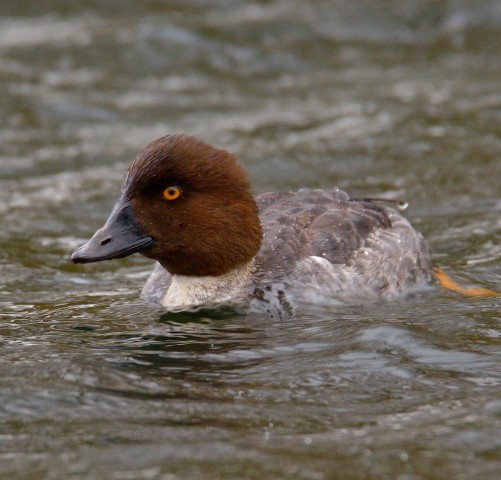
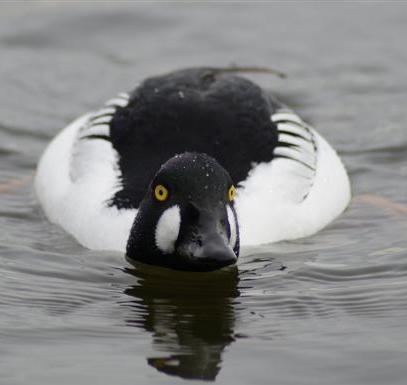
The male Goldeneye (photo above) adds a bright note to winter days with its radiant golden eye, glistening green-black head, and crisp black-and-white body and wings. The female (photo below) has a chocolate brown head with the same bright eye that gives this species its name. These distinctively shaped, large-headed ducks dive for their food, eating mostly aquatic invertebrates and small fish.
Most Goldeneye which winter here come from north or north-eastern Europe, arriving in October or November. They breed by the lakes and rivers of boreal forests across Canada and the northern United States, Scandinavia and northern Russia. They are migratory and most winter in protected coastal waters or open inland waters at more temperate latitudes including Arran.
Goldeneye return to their breeding grounds in April, where they breed in tree holes in woodland beside lakes and large rivers. They first nested in Scotland in the Grampians in 1970, and since then birds have been attracted to nest in specially designed boxes put up on trees close to their favoured lakes and rivers.
Courtship displays begin during the winter and it is common to see groups of male Goldeneye throwing their heads back and forward for the watching females.
Look out for these charming ducks this winter and please take a moment to report any sightings to me.
The male Goldeneye (photo above) adds a bright note to winter days with its radiant golden eye, glistening green-black head, and crisp black-and-white body and wings. The female (photo below) has a chocolate brown head with the same bright eye that gives this species its name. These distinctively shaped, large-headed ducks dive for their food, eating mostly aquatic invertebrates and small fish.
Most Goldeneye which winter here come from north or north-eastern Europe, arriving in October or November. They breed by the lakes and rivers of boreal forests across Canada and the northern United States, Scandinavia and northern Russia. They are migratory and most winter in protected coastal waters or open inland waters at more temperate latitudes including Arran.
Goldeneye return to their breeding grounds in April, where they breed in tree holes in woodland beside lakes and large rivers. They first nested in Scotland in the Grampians in 1970, and since then birds have been attracted to nest in specially designed boxes put up on trees close to their favoured lakes and rivers.
Courtship displays begin during the winter and it is common to see groups of male Goldeneye throwing their heads back and forward for the watching females.
Look out for these charming ducks this winter and please take a moment to report any sightings to me.