June 2026
Bird Sightings
June was a month of mixed weather with some very wet days, and some drier spells. The temperature increased gradually over the month after a coolish start. The heat also came with very calm days with the sea often like glass but the month ended with a more unsettled spell of windier, wetter and cooler weather. While the weather had a negative impact on some breeding species like nesting shore birds in some areas being flooded and reports of House Martin nests collapsing, the weather was generally conducive to most breeding birds.
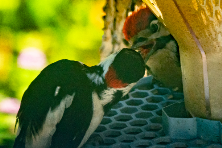
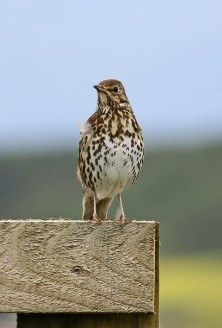
In gardens there were many reports of fledged birds including unfamiliar looking young birds, like Goldfinch without the red face of the adult birds, and Robin with spots and no red breast. Among the familiar garden birds, Blackbird, Song Thrush, Chaffinch, Blue Tit, Great Tit and Dunnock seemed to be doing well. Most prolific of all seemed to be House Sparrow, with forty in Kildonan on 18th, being one of the larger numbers. Also, there were many reports of numbers of Siskin and Goldfinch with young around. Again, it was encouraging to get reports of young Bullfinch, young Greenfinch and young Great Spotted Woodpecker from widespread locations. Ten Long-tailed Tit including young, in a garden in Shiskine on 4th was a particular garden highlight. Unusually, a pair of Common Sandpiper nested in a garden in Catacol
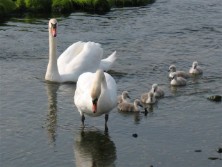
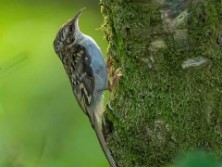
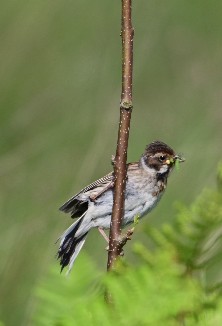
Away from gardens there were many signs of breeding including: a pair of Shelduck with four young at Clauchlands on 4th, Common Gulls with young on Blackwaterfoot beach on 5th, forty occupied Sand Martin nest holes in Glen Catacol on 9th, Woodpigeon with young in Catacol on 11th, Skylark and Reed Bunting carrying food on Machrie Moor on 20th, pair of Mute Swan with six young in Porta Leacach on 21st, Ringed Plover with young in Cordon on 21st, Oystercatcher with young in Kildonan on 22nd, Treecreeper with young in North Glen Sannox on 25th and Woodcock roding over Lakin Farm on 27nd. The largest group of Swallow reported was 22 in Kildonan on 1st and the largest group of House Martin reported was 24 at Slidderywaterfoot. Cuckoo, whose decreasing numbers are a cause for concern nationally, seems to be thriving on Arran. On the other hand, there was only one report from one area of Curlew with young and only reports from three areas of Lapwing with young.
The breeding success of some raptors is linked to the vole cycle. Bumper years of voles tend to be followed by a crash followed by a gradual build up, followed by a bumper year in a roughly four-year cycle. Those licensed to monitor raptor territories report small broods from some pairs of raptors and fewer nests, due to vole numbers remaining low again this year, perhaps because of the prolonged wet spell earlier in the year
In June there were no reports of Corncrake and none of Nightjar but other scarce summer visitors were reported including: one Wood Warbler Auchenhew Hill on 4th, two Dotterel Clachaig Farm on 6th, a Tree Pipit in Coire Fhraoich on 16th, a Spotted Flycatcher in Glenree on 19th, two Swifts over Lagg and Whiting Bay on 24th, a Garden Warbler in Lochranza also on 24th, and three Whinchat on Boguillie on 28th. In addition there was a report of a Quail calling on Friday 5th June from fields /suitable habitat in the south of the island. It has been heard almost every day since then. For more information on Quail click here.
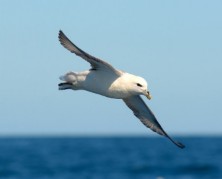
Other highlights in a month with over one hundred species reported, included: two Goosander in Catacol Bay on 4th, seven Black Guillemot at Thunderguy on 17th, one immature Puffin in Brodick Bay on 18th, fifty Shag off Kildonan also on 18th, sixty Gannet off Lochranza on 23rd, two Moorhen on Mossend Pond on 24th and two Common Crossbill in Glenkiln on 28th. Fulmar, which once commonly bred on cliffs around Arran, was reported only twice in June. Both times it was a single bird off shore on 4 June. One report from Auchenhew Bay and one report off Clauchlands Point.
For the second month in a row there were no reports of Little Egret. Last year in June there were seventeen reports of Little Egret, Eight of those reports were of two birds together. There were also no reports of Kingfisher. It is anticipated that later in the summer there will be increasing number of reports of both species on Arran as they disperse after breeding elsewhere. Also in July, look out for early signs of breeding being over for other birds this year. These could include the return of some Arctic breeding species to our shores, as they travel south. In June there was one Whimbrel in Pirnmill on 15th .
Finally remember July is the time when many birds, having raised their young, go about the process of renewing their feathers by moulting them. As birds are vulnerable when they are shedding flight feathers, they literally make themselves scarce. On any walk you may see fewer birds, but they are still around.